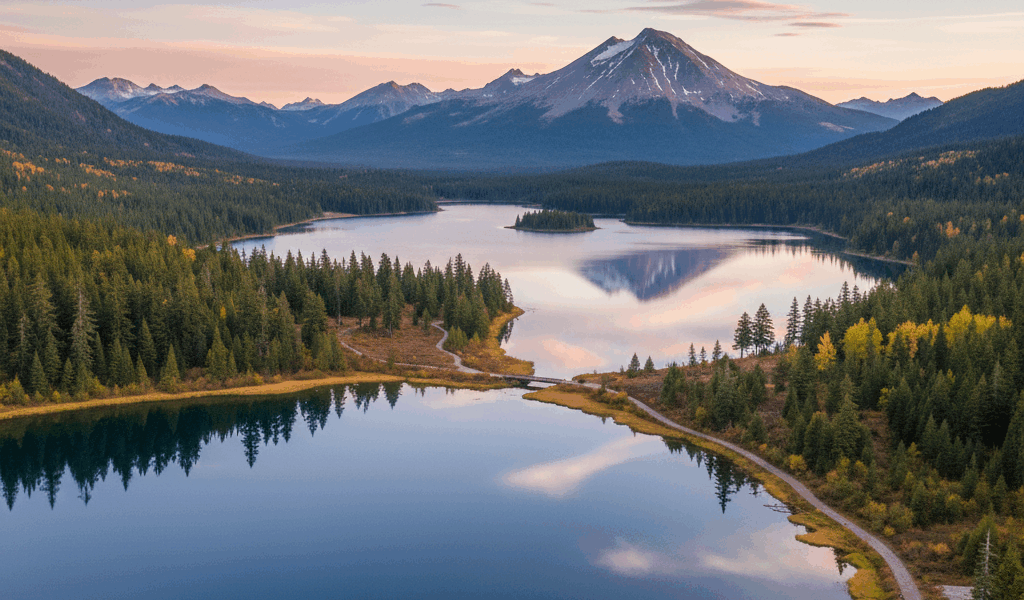
The first time I crested the summit near Mount Bachelor and looked out across the volcanic landscape of central Oregon, I understood why the Cascade Lakes Scenic Byway has earned its reputation as one of America’s premier cycling routes. With crystal-clear alpine lakes reflecting snow-capped peaks, ancient lava flows, and endless miles of smooth pavement winding through pristine wilderness, this 66-mile loop delivers an experience that belongs on every serious cyclist’s bucket list.
After riding this route multiple times over the past decade, I can confidently say it offers something unique in American cycling: the perfect combination of challenging climbing, breathtaking scenery, and that rare sense of riding through a landscape shaped by volcanic forces over millions of years. Whether you’re training for your first century or seeking a bucket-list destination ride, the Cascade Lakes Scenic Byway rewards every pedal stroke.
Route Overview and Key Statistics
The Cascade Lakes Scenic Byway forms a spectacular loop beginning and ending in Bend, Oregon. This challenging route demands respect from even experienced cyclists, but the rewards far exceed the effort required.
Essential Route Statistics
- Total Distance: 66 miles (full loop from Bend)
- Total Elevation Gain: 4,000+ feet
- Maximum Elevation: 6,300 feet near Mount Bachelor
- Difficulty Rating: Challenging (advanced intermediate to expert)
- Road Surface: Paved throughout with generally excellent conditions
- Traffic Level: Moderate to light (heavier near Bend and ski areas)
- Services: Limited once outside Bend; plan accordingly
The route follows Century Drive (Highway 372) west from Bend, climbing steadily toward Mount Bachelor before connecting with Forest Service roads that loop past the iconic Cascade lakes. The return leg brings riders back through volcanic terrain and into Bend from the south.
Best Time to Ride the Cascade Lakes Loop
Timing your ride correctly is absolutely critical for this high-elevation route. Snow can linger well into late spring and return as early as October at these altitudes.
Optimal Riding Season: June Through October
June: The route typically opens by mid-June, though some years see snow lingering at higher elevations. Early season riding offers cooler temperatures but requires checking road conditions before departure. Wildflowers begin appearing along the roadsides, and the lakes remain icy cold.
July and August: Prime riding season with warm temperatures, long daylight hours, and fully open roads. Expect daytime highs in the 70s to low 80s at elevation, with mornings starting cool in the 40s and 50s. These months see the highest traffic, particularly on weekends.
September: My personal favorite time to ride this route. Crowds thin dramatically after Labor Day, temperatures moderate to comfortable levels, and the autumn light transforms the landscape. The volcanic lakes appear even more vivid under clear fall skies.
October: A gamble that sometimes pays off beautifully. Early October can offer spectacular riding with fall colors and empty roads. However, early snowfall can close portions of the route without warning. Check conditions carefully and have a backup plan.
Weather Considerations
Central Oregon’s high desert climate means dramatic temperature swings between morning and afternoon. Start early to avoid afternoon thunderstorms that frequently develop over the Cascades during summer months. These storms can be intense but typically pass quickly. Lightning presents a real hazard on exposed sections of the route.
Detailed Segment Breakdown
Understanding the route’s distinct segments helps with pacing, planning rest stops, and appreciating the diverse landscapes you’ll encounter.
Segment 1: Bend to Mount Bachelor (22 miles)
The journey begins in downtown Bend, heading west on Century Drive. The first several miles roll through residential areas and light forest, providing a gentle warmup before the climbing begins in earnest.
Around mile 8, the road tilts upward more decisively as you enter Deschutes National Forest. The pavement quality remains excellent throughout this section, with wide shoulders accommodating cyclists safely. Ponderosa pines gradually give way to higher-elevation Douglas fir and mountain hemlock.
The approach to Mount Bachelor delivers the route’s most sustained climbing, with grades occasionally reaching 6-8%. The ski resort area, around mile 22, offers the first reliable services since leaving Bend. A day lodge typically operates during summer months, providing water, restrooms, and food options. This makes an ideal regrouping point before tackling the lake section.
Segment 2: Century Drive Lakes Loop (30 miles)
Departing Mount Bachelor, the route enters its most spectacular and remote section. The next 30 miles wind past a stunning succession of volcanic lakes, each with its own character and beauty.
Todd Lake: A short side trip leads to this pristine alpine gem, perfect for a quick rest or photo opportunity. The lake sits at 6,150 feet and offers restroom facilities during summer.
Sparks Lake: This shallow lake reflects the South Sister volcano perfectly on calm mornings. A popular photography destination, it exemplifies the volcanic landscape that defines this route.
Devils Lake: Despite its ominous name, this vivid green lake provides a welcome sight for tired cyclists. The color results from dissolved minerals and fine glacial sediment.
Elk Lake: The route’s largest lake offers a rustic resort with cabins, a small store, and a restaurant. This represents your best opportunity for substantial food and rest between Mount Bachelor and the route’s conclusion.
Hosmer Lake: Famous among fly fishers for its Atlantic salmon population, this lake sits just off the main route and rewards a brief detour.
Lava Lake: Named for the lava flows visible along its shores, this lake marks the route’s southern extent. From here, the return journey begins.
Segment 3: Return to Bend via South Century Drive (14 miles)
The final segment trends generally downhill as you complete the loop back toward Bend. This section passes through more volcanic terrain, including views of ancient lava flows and cinder cones. The downhill grades make for fast, enjoyable riding, though remain alert for traffic increasing as you approach the city.
Optional Extension: Newberry Volcanic Monument
Strong riders seeking additional mileage and volcanic scenery can extend the route by continuing south to Newberry Volcanic Monument. This adds approximately 25 miles each way but rewards cyclists with views of Paulina Falls, East Lake, and the remarkable Newberry Caldera. The additional climbing is substantial, making this extension suitable only for fit, experienced riders comfortable with a 100+ mile day.
Route Highlights and Must-See Features
Volcanic Lakes
The Cascade Lakes region contains over 100 lakes, many formed in volcanic depressions or dammed by ancient lava flows. The colors range from deep blue to vibrant green, depending on depth, mineral content, and glacial sediment. Each lake offers unique beauty, and the cumulative effect of passing so many pristine bodies of water creates an unforgettable experience.
Cascade Mountain Panoramas
On clear days, the route offers views of multiple Cascade volcanoes. Mount Bachelor dominates the early miles, while the Three Sisters peaks appear throughout the lake section. On exceptional days, views extend north to Mount Jefferson and south toward Mount Thielsen.
Three Sisters Wilderness Access
The route skirts the eastern boundary of the Three Sisters Wilderness, one of Oregon’s most beloved protected areas. Several trailheads along the route provide access for hikers, though cyclists will appreciate simply viewing these dramatic peaks from the road.
Ancient Lava Flows
Central Oregon’s volcanic heritage remains visible throughout the ride. Black lava flows, cinder cones, and volcanic craters appear regularly, reminding riders they’re cycling through geologically active terrain. The Newberry volcanic system remains considered active, though its last eruption occurred approximately 1,300 years ago.
Accommodation and Logistics
Using Bend as Your Base
Bend, Oregon serves as the natural starting and ending point for the Cascade Lakes loop, and the city has evolved into one of America’s premier cycling destinations. The town offers:
- Lodging: Options ranging from budget motels to luxury resorts, with numerous bike-friendly properties
- Bike Shops: Several full-service shops offering rentals, repairs, and local route knowledge
- Dining: Exceptional restaurant scene with options for every budget and dietary preference
- Breweries: Bend claims more breweries per capita than almost any American city, perfect for post-ride recovery
Book accommodations well in advance for July and August visits, as Bend’s popularity creates high demand during peak season.
Backcountry Camping Options
Limited backcountry camping exists along the route for adventurous cyclists comfortable with self-supported riding. Dispersed camping is permitted in Deschutes National Forest with restrictions. Elk Lake Resort offers the only commercial camping directly on the route.
For multi-day tours combining this route with others in the region, Bend provides an excellent hub for Pacific Coast Highway connections and access to the Historic Columbia River Highway for an extended Oregon cycling adventure.
Critical Safety Considerations
Altitude Effects
Riders from lower elevations should account for altitude effects at 5,500-6,300 feet. Expect reduced power output, increased breathing effort, and potentially faster onset of fatigue. Hydration becomes even more critical at elevation, where dry air accelerates fluid loss. Consider arriving in Bend a day early to begin acclimatization.
Afternoon Thunderstorms
Summer afternoons frequently bring thunderstorms to the Cascades. These storms develop rapidly and can produce dangerous lightning, heavy rain, and occasionally hail. Plan to complete exposed sections before early afternoon, and know the location of potential shelter along your route. The lodge at Mount Bachelor and the resort at Elk Lake offer the only substantial structures.
Limited Services and Communication
Cell phone coverage disappears for significant portions of the route. Services beyond water and basic snacks exist only at Mount Bachelor and Elk Lake. Carry everything you need, including tools for basic repairs, as the nearest bike shop is back in Bend. Let someone know your planned route and expected return time.
Wildlife
The route passes through black bear habitat, and deer frequently cross the road, particularly near dawn and dusk. Coyotes and smaller wildlife are common. Maintain awareness and give wildlife appropriate space.
Essential Gear Recommendations
Clothing Layers Are Non-Negotiable
Temperature swings of 30-40 degrees between early morning and midday are normal. I recommend:
- Arm warmers and leg warmers (easily removed and stowed)
- Lightweight wind vest or packable jacket
- Full-finger gloves for morning descents
- Rain jacket (weighs little, provides security against sudden weather)
Even on warm summer days, pre-dawn starts and high-elevation descents demand warm layers. The descent from Mount Bachelor can be genuinely cold.
Hydration and Nutrition
Carry at least two large water bottles and consider a hydration pack for additional capacity. Plan to consume 20-32 ounces per hour depending on conditions. The altitude and dry air accelerate dehydration significantly.
Bring more food than you think you’ll need. Reliable resupply points are few, and altitude can increase caloric requirements. Energy gels, bars, and real food should total at least 400-500 calories per hour of riding.
Mechanical Preparedness
Given the route’s remoteness, carry a complete repair kit including:
- Spare tubes (minimum two)
- Patch kit
- Multi-tool with chain breaker
- Tire levers
- Small pump or CO2 inflators with adequate cartridges
- Quick link for chain repair
Final Thoughts
The Cascade Lakes Scenic Byway represents everything exceptional about cycling in the American West: challenging terrain that rewards fitness, scenery that stops you in your tracks, and roads that seem designed specifically for two-wheeled exploration. The volcanic landscape creates an atmosphere unlike anywhere else I’ve ridden, and the quality of the route’s infrastructure reflects Oregon’s commitment to cycling.
This isn’t a ride for beginners or those unprepared for sustained effort at altitude. But for cyclists ready to test themselves against one of America’s classic loops, the Cascade Lakes Scenic Byway delivers an experience that will stay with you long after you’ve returned to flatter terrain.
Plan carefully, respect the mountains, and give yourself time to absorb the remarkable landscape. The Cascade Lakes have been drawing visitors for generations, and cyclists have only recently discovered what makes this corner of Oregon truly special.
About the author: This guide reflects personal experience riding the Cascade Lakes Scenic Byway across multiple seasons, combined with insights from local cycling communities and Deschutes National Forest resources. Route conditions and services should be verified before riding, as conditions change seasonally.