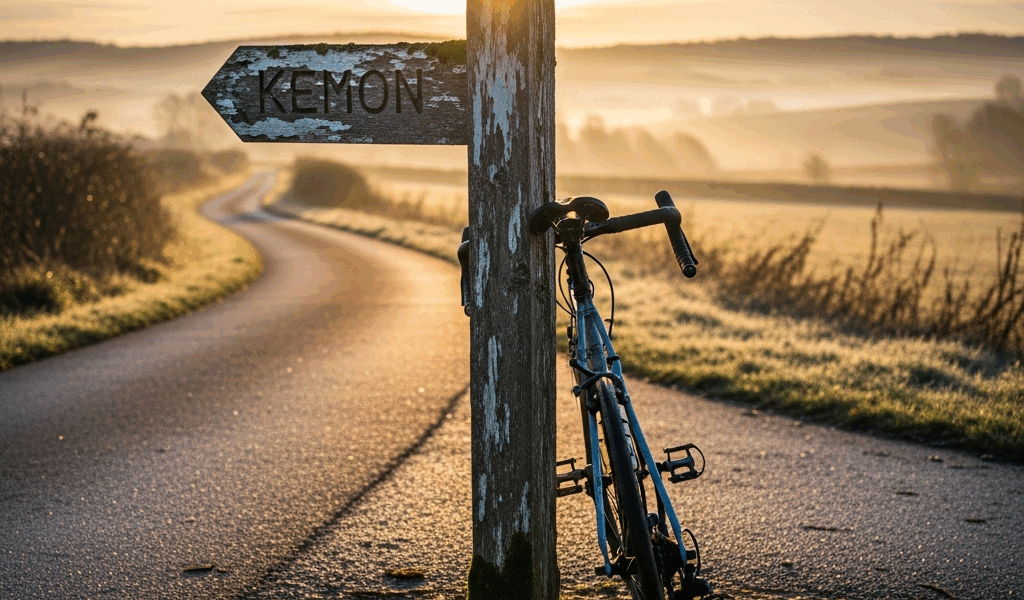
EuroVelo 6 Overview — 4,450 km Across 10 Countries
Planning a EuroVelo 6 trip has gotten complicated with all the conflicting advice flying around. I wish this guide existed when I first committed to riding from the Atlantic to the Black Sea on a bike that probably cost less than a decent tent. This 4,450-kilometer ribbon of pavement, gravel, and occasional dirt tracks follows three of Europe’s greatest rivers across a continent — connecting Saint-Nazaire on France’s western coast to Constanta on the Romanian shore of the Black Sea.
Here’s what separates EuroVelo 6 from other long-distance cycling routes: you’re never really lost. The rivers do the navigation for you. Loire Valley château banks give way to the Rhine’s industrial heartland, then Austria’s Danube gorges open up, and eventually the whole thing spills down through the Balkans to the sea. Water is your compass. Always.
Most people I’ve talked to fall into two camps. There are the obsessives — riders who grind the entire 4,450 kilometers over six to eight weeks, camping rough, living on bread and cheese, measuring progress in river valleys conquered. Then there are the section riders. The pragmatists who block out two, three, maybe four weeks and pick segments that fit their schedule. Both work. Neither is more “legitimate.” The route genuinely doesn’t care which kind of person you are.
The 10 countries you’ll pass through read like a political map of modern Europe: France, Germany, Austria, Hungary, Serbia, Romania, Bulgaria, and three others depending on your exact routing choices. Infrastructure quality varies wildly. So does cost. The landscape transforms completely every 500 kilometers or so — you start in temperate Atlantic maritime climate and end sweating through continental Black Sea heat. Pack accordingly. Seriously.
When planning a EuroVelo 6 trip that actually works, understand the route in sections rather than as one monolithic thing. Trying to categorize 4,450 kilometers as simply “easy” or “hard” is useless. France’s Loire Valley is nothing like Serbia’s backroads, which bear zero resemblance to Bulgaria’s coastal plains. Your legs will feel different. Your wallet will feel very different. Your mental approach needs recalibrating every few hundred kilometers — that’s just the reality of a route this long.
The Best Sections for a Two-Week Trip
Honestly, two weeks is the sweet spot for most people. Long enough to feel like a real achievement, short enough that you don’t need to quit your job or explain yourself at too many family dinners. Within EuroVelo 6, three sections stand out as genuinely worth your limited time — depending on what you actually want from the experience.
France — The Loire Valley Foundation Ride
Start here. Saint-Nazaire to Orléans covers roughly 380 kilometers and should take 8 to 10 days at a comfortable pace. You get castles, wine regions, excellent cycling infrastructure, and the psychological boost of feeling like a proper touring cyclist while still being in a wealthy European country where ordering a café crème at any stop is completely normal.
The Loire Valley path is almost entirely flat. The Loire itself is massive and slow here — nothing like the moody tidal zones near the coast. Towns are frequent: Nantes, Angers, Tours, Blois. Resupply is easy. Hotels are abundant. Food is spectacular without breaking the bank if you’re paying attention. A decent lunch runs 12 to 16 euros. Camping is everywhere.
That’s what makes this section endearing to first-time touring cyclists. The signage is excellent. Surface is mostly smooth asphalt with occasional crushed stone. Daily distances feel achievable even for newcomers — and that matters psychologically when you’re learning how your body actually handles 70 kilometers a day. By Orléans, you’ve proven something to yourself. That counts for more than people admit.
Germany — The Rhine Drama
Orléans to Konstanz — the German town where the Rhine begins — is roughly 850 kilometers, which pushes past two weeks. But here’s the thing: the Rhine section from Cologne to Konstanz is the part people remember. It’s 780 kilometers through some of Europe’s most iconic landscape — wine regions, castles stacked on cliffs, the Black Forest on one side, Alsatian villages on the other.
Cycling the Rhine between Cologne and Konstanz requires 10 to 12 days minimum. Do this as your two-week segment and you’ll spend time on one of the most famous cycling corridors on the continent. The path overlaps with EuroVelo 15 for most sections, which means infrastructure is genuinely excellent — purpose-built paths, separated from traffic, rolling through Germany’s most beautiful wine country.
The Rhineland towns — Mainz, Koblenz, Bingen — feel like you’ve stepped into a postcard collection. Medieval towers line the banks. The cycling itself is flat to rolling, never genuinely punishing. Food is good and cheap. A meal costs 10 to 14 euros. The downside: it’s popular. Very popular. In peak season — July and August — you’ll share the path with hundreds of other cyclists daily. Not necessarily bad. There’s something reassuring about riding among your people. But worth knowing going in.
Austria into Hungary — The Serious Cyclist’s Choice
Konstanz to Budapest is roughly 1,200 kilometers — too far for two weeks unless you’re aggressive and genuinely don’t care about sightseeing. But Konstanz to Vienna (570 kilometers, 7 to 8 days) or Vienna to Budapest (330 kilometers, 4 to 5 days) represents the transition point where EuroVelo 6 stops being “nice European cycling” and becomes something more honestly adventurous.
Austria’s Danube Valley — the Wachau specifically — is legitimately stunning. The river gorges into the landscape. Vineyards climb steep cliffs. Towns like Melk and Dürnstein have that austere Central European charm that photographs better than it actually feels when you’re sweating up a hill at 30 degrees Celsius. The cycling is variable: flat sections along the river, then real elevation gain when the route wanders inland.
Vienna itself is worth three days minimum if you have them. The path into the city is excellent. Cycling infrastructure is some of the best in Europe — separated lanes, clear signage, thoughtful design. And then you cross into Hungary, and everything changes.
Budapest to the Danube Bend — roughly 100 kilometers, doable in two days — shows you the Balkans without fully committing to them. Dramatic landscape, less tourism infrastructure than Austria, a genuine sense that you’ve entered a different Europe. The architecture shifts. The food shifts. Your daily budget drops by about 30 percent, apparently overnight.
Country-by-Country Infrastructure Rating
As someone who sat in a Budapest café last summer genuinely debating whether to push toward Serbia or turn back, I learned everything there is to know about how infrastructure quality shapes a cycling trip. It’s not one factor among many — it’s the factor that determines whether your days feel joyful or grinding. Here’s how each country actually performs:
France — 9/10
Loire Valley cycling is brilliant. Paths are maintained, signage is clear, and you’re never confused about where the route goes. Surface quality is excellent throughout — smooth asphalt or high-quality crushed stone. Accommodation ranges from €15 camping to €60-plus hotels. Food is abundant. Bakeries, markets, and restaurants appear constantly without any effort on your part.
One caveat: early sections near Saint-Nazaire involve some road cycling on minor roads — less pleasant than dedicated paths. But 200 kilometers in, you’re on proper EuroVelo infrastructure and the whole thing clicks into place.
Germany — 8/10
The Rhine sections are excellent — clear signage, dedicated paths, high surface quality. Industrial sections around the Ruhr Valley are less picturesque but still well-maintained and totally cyclable. Camping is abundant and cheap (€12-18 per night). Hotels are reasonable (€45-70).
Quality drops slightly north of Cologne if you’re riding toward the Netherlands. Still good infrastructure — just more utilitarian, less “tourist-grade” than the Rhine corridor further south.
Austria — 8/10
The Danube Valley path is beautifully maintained and signage is excellent. Developed cycling infrastructure — genuinely. However, the river gorges force some detours away from the water, and those sections are less predictable. Some days you’ll ride a dedicated path with river views the whole way. Other days you’ll wind through wine country on minor roads. Camping runs €15-20. Hotels €50-80. Food costs match Germany closely.
Hungary — 6/10
Budapest itself has decent cycling infrastructure. The Danube path into and out of the city is well-marked. But outside the capital, signage becomes irregular — the path exists but it’s less obvious. Some sections are dedicated cycling paths; others share minor roads with cars that treat speed limits as suggestions.
Surface quality is variable. Long stretches of smooth asphalt, then surprise sections of concrete slabs that rattle your teeth loose. Camping: €8-12. Hotels: €25-40. Food is remarkably cheap — a solid meal costs €5-8. Don’t make my mistake of budgeting like you’re still in Austria.
Serbia — 5/10
Honest assessment: infrastructure varies dramatically. The Danube Gorge sections — the Iron Gate — are dramatic and absolutely worth cycling, but signage is minimal. You need maps, physical or offline digital, because you genuinely cannot rely on EuroVelo markers appearing when you need them.
Surface quality drops noticeably. Gravel sections, potholed asphalt, occasionally just rough dirt. Not unrideable — thousands of people do it annually — but it requires more mechanical sympathy and patience than anything you experienced in Austria or Germany. Accommodation is cheap: €6-10 camping, €15-30 hotels. Food is very cheap: €3-5 for a meal. The trade-off is straightforward. Less money spent, less infrastructure in return.
Romania — 4/10
This is where things get genuinely rough. Infrastructure deteriorates significantly. The Danube path exists but it’s inconsistent — some sections are reasonable, others are basically goat tracks. I’ve ridden sections where the “path” was actively overgrown and required dismounting to push through vegetation. Memorable, but not in the way you planned.
Signage is rare. Surface quality is poor — mostly gravel and potholed asphalt. Offline maps are non-negotiable here. The official EuroVelo route might not be the best option, as local knowledge sometimes reveals better-maintained alternatives. That is because the official route hasn’t been updated to reflect years of deterioration in certain sections.
Rural Romania is genuinely beautiful and far less touristed than anywhere else on the route — that’s the real compensation. Accommodation: €5-8 camping, €12-25 hotels. Food: €2-4 for meals. Your budget shrinks dramatically.
Bulgaria — 3/10
Infrastructure is minimal. The Danube path exists in theory — in practice it’s fragmented, poorly maintained, and often abandoned for long sections. You’ll spend stretches riding minor roads with no dedicated cycling infrastructure whatsoever. This is adventure cycling. Full stop.
Not bad — I genuinely enjoyed it — but it requires mechanical confidence and comfort with uncertainty. Surface is mostly rough asphalt and gravel. Signage is minimal. Camping: €5-8. Hotels: €10-20. Food: €2-3. You’re traveling cheap, but you’re also accepting rough edges as part of the deal.
Budget — What EuroVelo 6 Actually Costs
The cost spread between the Atlantic coast and the Black Sea is staggering. Probably should have opened with this section, honestly, because budget determines which sections you prioritize more than almost anything else on this route.
Here’s what I actually spent across different sections:
France — €45-60 Per Day
Daily budget breakdown: camping €15, food €22, bike maintenance and miscellaneous €8-10. Hotels push daily costs up to €60-75. France is expensive — it’s Western Europe and it’s popular, which is a combination that costs you money. A coffee runs €2-3. Lunch is €12-16. Dinner at a casual restaurant is €18-25. But what is expensive, really? In essence, it’s relative — and compared to what you get in return along the Loire, it’s probably worth it. But it’s worth budgeting honestly before you commit to a long stretch through France.


Stay in the loop
Get the latest cycle routes world updates delivered to your inbox.