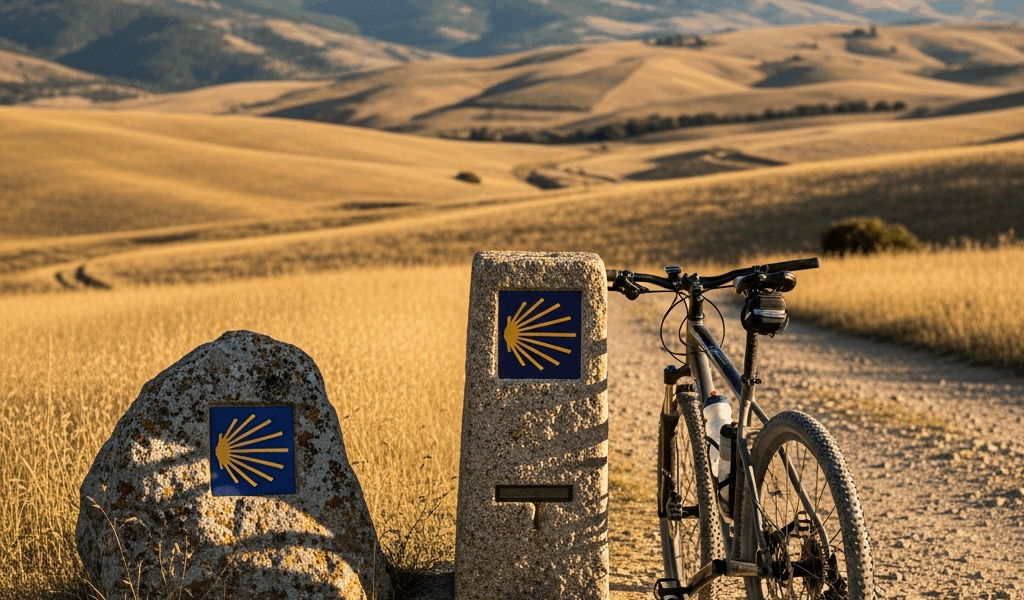
Cycling the Camino de Santiago — A Biker Guide to the Pilgrimage Route
Cycling the Camino de Santiago has gotten complicated with all the conflicting advice flying around. Most of it is written for walkers. I spent three weeks last spring pedaling the whole thing — and what I found was that cycling the Camino is genuinely its own animal. The distances change. The logistics shift. Your daily rhythm looks nothing like what the walking guides describe. Staring down a 120-kilometer day is a different problem than staring down a 20-kilometer one. So is finding an albergue that hasn’t already handed all its beds to walkers by noon.
Today, I will share it all with you — the stuff I desperately needed before I left and couldn’t find anywhere. Credential rules. Route recommendations. Bike choices that actually matter. These details sound minor until they’re the reason your trip goes sideways on Day 3.
The Camino by Bike — How It Differs from Walking
Probably should have opened with this section, honestly. It’s the most important thing to absorb before you commit to pedaling instead of walking.
But what is the Compostela credential? In essence, it’s the official certificate confirming you completed the pilgrimage. But it’s much more than that — it’s also the document that shapes your entire planning process, and the rules for cyclists are different than they are for walkers. Walkers need a minimum of 100 kilometers on foot. Cyclists must cover 200 kilometers by bike. Twice the distance. It sounds arbitrary until you realize you can’t just join the route five days from Santiago and claim a certificate. You’re committing to a real stretch of the road.
The 200-kilometer minimum typically starts around Ponferrada on the Frances route. I started from León — roughly 315 kilometers out — which gave me room to breathe. That cushion mattered more than I expected.
Albergue dynamics are something nobody warns you about either. In many walking-focused albergues, walkers get first dibs on beds. You might roll in at 2 PM — early by any reasonable standard — and still get turned away. I learned this the hard way in Mansilla de las Mulas. Arrived at 2 PM, confident that showing up before dinner guaranteed me a spot. The hospitalero was kind about it. Firm, though: walkers first. I ended up riding another ten kilometers to a private room. Don’t make my mistake.
Expect to pay more, too. Walkers typically pay €12–18 per night. Cyclists pay €15–22. Separate bike parking fees — usually €2–5 — pop up often enough to notice. Over two weeks, it adds up. Budget accordingly.
And the pace changes everything else. Walkers cover 20–30 kilometers daily. Cyclists do 60–100. That means different landscapes, different people, different arrival times — a whole different relationship with the route. The slow-burn evening culture that builds between walkers? It doesn’t quite exist for cyclists in the same way. You move through the same space faster, which is sometimes a gift and sometimes a loss.
Which Camino Route to Cycle
So, without further ado, let’s dive in — route by route, honestly ranked for people on bikes.
The Camino Frances is the default answer. Most famous. Best infrastructure. Clearest signage. About 70% of all pilgrims choose it. It runs roughly 750 kilometers from Saint-Jean-Pied-de-Port to Santiago. That’s what makes it endearing to us cyclists — you’re never lost, never without a bed option, never far from a café. The trade-off: busy roads, packed albergues by noon, restaurants overwhelmed in small villages. Parts of it are relentless pavement grinding through heavily trafficked regions. You’re rarely alone, which some people love and others find exhausting.
The Camino del Norte hugs the northern Spanish coast from Irun to Santiago — about 820 kilometers total. Green hills, coastal views, serious elevation. The bike infrastructure is thinner than the Frances. Fewer pilgrims, more authentic village experiences, fewer services catered to your specific needs. The weather runs cooler and wetter. I’ve talked to cyclists who found the Norte more rewarding precisely because it demanded more of them. That tracks.
The Via de la Plata might be the best option, as cycling the Camino requires actual rideable terrain — and the Plata delivers that in ways the Frances sometimes doesn’t. That is because the grades are generally gentler, the road surfaces are decent, and the crowds are thin. It runs 625 kilometers from Sevilla north to Astorga, then connects to the Frances for the final stretch. The landscape shifts from Andalusian olive groves to central meseta to green northern terrain. Genuinely enjoyable on a bike. The trade-off: you’re starting further south, which adds real distance if you want the full experience.
The Camino Portugues (643 kilometers from Lisbon) and the Camino Inglés exist too. Both work for cyclists. Both are less developed infrastructure-wise. Most people arriving from the US stick with Frances, Norte, or Plata unless they’re already positioned in Portugal.
Choose based on what you actually want. Manageable crowds and solid infrastructure? Frances. Scenery and a genuine challenge? Norte. Best pure cycling experience? Via de la Plata.
What Bike to Ride
A gravel bike is the right call for the Camino. Full stop. I’m apparently a gravel convert now — I rode a Salsa Vaya 3, around $1,400, and it handled every surface I threw at it without complaint.
Significant portions of the Camino — especially on the Frances and Norte — include unpaved sections. Crushed stone, packed dirt, occasional mud. Some stretches are short. Others run 10–15 kilometers without a break. A gravel bike with 42mm or larger tires rolls over rough terrain without drama and still pedals efficiently on pavement. The geometry sits you upright enough for long days without making you feel like you’re riding a couch.
A road bike is viable if you’re sticking strictly to the Frances and willing to skip scenic alternate routes. Road tires — 23–28mm — roll faster on pavement, and the lighter weight helps on long days. But you lose flexibility. When I passed a sign pointing toward a scenic unpaved alternative through a village nobody else was going through, I took it. Road bike riders often can’t. That’s a real loss.
Mountain bikes are overkill. I saw a few fully-suspended riders on the route. They looked miserable — and I say that sympathetically. Suspension soaks up pedaling energy. The geometry isn’t designed for 80-kilometer days on pavement. Rolling resistance is noticeably higher. If you arrive with a full-suspension mountain bike, you’ll spend two weeks wishing you’d packed something else.
Tire choice matters more than most people assume. I started with Schwalbe G-One Allround tires, 45mm wide. Puncture-resistant, durable, forgiving. Through 600 kilometers, I had exactly one flat — a thorn that honestly could have gotten through any tire. The reliability was genuinely calming. Some cyclists on the Frances go narrower, 38–40mm, trading puncture protection for slightly faster rolling. Your call.
While you won’t need a full workshop in your panniers, you will need a handful of essentials. Spare tire. Two extra tubes. Patch kit. A decent hand pump — not a CO2 cartridge-only setup. I was too confident about puncture resistance and only packed one spare. Near Burgos, I met a cyclist who’d flatted twice in four days and deeply regretted his minimalist kit. Don’t be that person.
Gearing deserves thought too. The Norte and the Pyrenees sections include sustained climbs. A compact chainring setup — something like 50/34 with an 11–32 cassette — gives you enough range for most terrain. I rode a 46/36 compact with an 11–34 cassette and occasionally wished I’d gone slightly lower. Test on local hills before you leave. Your legs will tell you what they need.
Daily Distances and Itinerary by Bike
Cyclists on the Frances typically cover 70–100 kilometers daily. Some push to 120 on good days. Regularly going harder than that burns you out — the landscape blurs, your legs revolt, and you stop caring about where you are. I averaged about 85 kilometers per day over three weeks. That left enough time to explore towns, eat a real lunch, and not arrive completely destroyed every evening.
A 10–14 day itinerary works well for cyclists covering the 200-kilometer minimum. Here’s a rough stage breakdown starting from Ponferrada — a sensible starting point if you’re flying into Madrid:
- Day 1 (Ponferrada to Villafranca): 76 km. Rolling terrain, a medieval town worth stopping for.
- Day 2 (Villafranca to Cacabelos): 24 km. Short day — intentionally. This is when jet lag and accumulated tiredness actually hits you.
- Day 3 (Cacabelos to Astorga): 88 km. Long day. The landscape opens. By the end, you’ll know whether 80-kilometer days are sustainable for you.
- Day 4 (Astorga to Mansilla): 82 km. Exposed meseta riding. Bring sunscreen. Bring more water than you think you need — then bring more.
- Day 5 (Mansilla to León): 38 km. Recovery. Rest. Eat something good.
- Day 6 (León to Sahagún): 48 km. Mixed terrain, decent infrastructure throughout.
- Day 7 (Sahagún to Carrión de los Condes): 42 km. The meseta in full, uninterrupted force.
- Day 8 (Carrión to Fromista or Ledigos): 70 km total. Fromista makes a natural split at 40 km if you want a shorter day.
- Day 9 (Fromista to Burgos area): 90 km. Long — but Burgos rewards arriving with time to explore it.
- Day 10 (Burgos to Atapuerca or Santo Domingo): 50 km. A shorter leg before serious climbing resumes.
- Day 11 (Santo Domingo to Villamayor): 95 km. Climb to Alto de la Lora, then descend into noticeably greener terrain.
- Day 12 (Villamayor to Logroño): 72 km. Transition from meseta to wine country — a genuine mood shift.
- Day 13 (Logroño to Nájera): 30 km. Another short day. Take it.
- Day 14 (Nájera to Santo Domingo de la Calzada): 24 km. Adjust based on your pace and energy.
That’s roughly 750 kilometers total — well above the 200-kilometer requirement. Most cyclists extend into a final week, taking slower days through the Basque region before arriving in Santiago somewhere around Day 18–21.
The mistake most cyclists make is underestimating recovery. First few days feel manageable. Then your legs start hurting in new ways and your rear end develops strong opinions about your saddle choice. By Day 5 or 6, you’ve usually found your real pace. I started aggressively — 100+ kilometer days right out of the gate — and felt hollowed out by Day 5. Backing off to 70–80 kilometers daily for a week brought the enjoyment back. Start slower than you think you need to. That was the most useful thing I learned.
Logistics — Getting Your Bike to Spain
Flying with a bike is straightforward once you’ve done it once. Most European carriers allow one bike in a hard case or bike bag as standard checked luggage. Ryanair, Iberia, Vueling, and Air Europa are all common options from the US. Policies vary — check your specific airline before you book, not after.
For hard cases, the SCICON AeroComfort 3.0 runs about $400. It’s bombproof. Probably overkill unless you’re flying constantly. A soft bag from Evoc or Rhinowalk — around $100–150 — works fine for a single trip. I used an Evoc bike travel bag. The bike arrived pristine. Zero drama.
First, you should properly pack the bike — at least if you want it to survive. Remove the pedals. Turn the handlebars parallel to the frame. Partially deflate the tires so internal pressure doesn’t stress bag seams at altitude. Wrap contact points with bubble wrap. Twenty minutes of careful packing does the job. You’re not building a vault — you’re just preventing hard impacts.
Madrid-Barajas is the most practical arrival airport for US cyclists. Direct flights from the US, major international hub, about 400 kilometers from the Frances starting points. Biarritz in France sits closer to Saint-Jean-Pied-de-Port if you’re flying from Europe. Porto works if you’re starting the Camino Portugues.
Renting a bike in Spain is possible. Hit-or-miss, honestly. Rental shops in Madrid and Barcelona exist, but decent equipment runs €40–80 daily. Over a 14-day trip — that’s potentially $1,400+ just for rental fees. Flying with your own bike is almost always cheaper, and you’re riding equipment you actually know and trust. You also own it at the end.
Most albergues along the route have secure bike storage — some charge €2–5 extra, a few have nothing. Call ahead if security matters to you. Urban stops like León and Burgos have real bike shops for repairs. Small villages generally don’t. Plan around that reality.
Shipping your bike home from Santiago or Madrid runs $150–250 via DHL or similar. Most cyclists pack it back into the same bag they arrived with. That was 2024 pricing, so check current rates.
Cycling the Camino de Santiago is genuinely different from walking it — and different in ways that often make it better, if you’ve planned for them. You move faster. You see more landscapes. You encounter fewer crowds on the right routes. The rhythm is yours, not dictated by sore feet and blister stops. Most guides miss all of this. This one exists because you deserve to know what you’re actually getting into — not a walker’s journey on two wheels, but a legitimately different pilgrimage worth doing on its own terms.

Stay in the loop
Get the latest cycle routes world updates delivered to your inbox.